
What is a Bassoon?
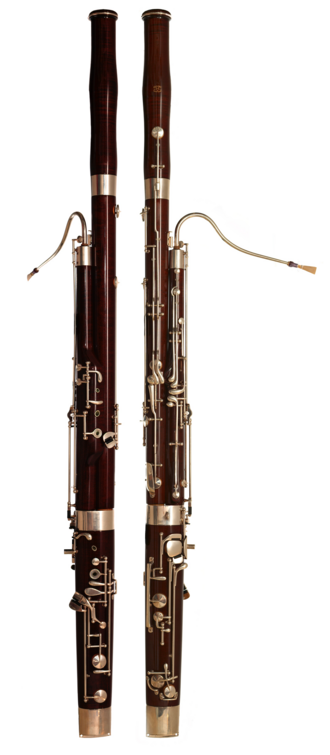
The bassoon is a great instrument, but it has some quirks.
It’s big. It’s complicated. It has a long metal thing called a bocal, a double reed, and nine keys for your left thumb alone.
But there’s a reason musicians put up with all of that.
The bassoon has one of the most distinctive sounds in the orchestra. It can be warm and expressive, dark and mysterious, funny, or surprisingly powerful.
So, what exactly is a bassoon?
The bassoon is a double-reed woodwind instrument. Instead of blowing directly into the instrument, you blow through two small pieces of cane—the reed—which vibrate to create the sound.
The bassoon itself is made from several sections that fit together to form a long, folded tube. If you stretched it out, a bassoon would be roughly eight feet long!
The folded design makes that long tube manageable enough to hold and play.
Why is it so big?
Because low notes need a long tube.
The bassoon’s long air column gives it its deep range, while folding the tube lets the instrument remain a practical size.
A bassoon is normally played sitting down, supported by a seat strap or harness.
What does a bassoon sound like?
The bassoon has a warm, woody, reedy sound that can change dramatically depending on the register and the player.
It’s an important member of the woodwind section in both orchestras and concert bands, where it often provides the lower voice of the woodwinds.
But don’t think of it as just a background instrument. Bassoons get plenty of melodies, solos, and moments when everyone else has to listen.
[Listen to the bassoon →]
What about that double reed?
The reed is one of the bassoon’s most important—and sometimes frustrating—features.
A bassoon reed consists of two thin pieces of cane tied together. When you blow through it, the cane vibrates and sets the air inside the instrument moving.
The reed has a huge effect on how the bassoon feels and sounds. That’s why bassoonists spend a surprising amount of time choosing, adjusting, and eventually making their own reeds.
It’s one of the bassoon’s quirks you’ll learn to appreciate.
Why are there so many keys?
You’ve probably noticed that bassoons have a lot of keys.
The bassoon’s long, folded tube and wide range require a complicated key system. Some notes even have several possible fingerings.
The good news is that you don’t have to learn them all at once. Beginners start with a handful of notes and gradually add more.
Is bassoon hard to learn?
The bassoon has some challenges that are unique to the instrument. Reeds can be finicky, the fingering system takes time to learn, and producing a beautiful, consistent sound takes practice.
But you don’t need to understand everything before you begin.
With a good instrument, a workable reed, and a good teacher, a beginning bassoonist can make progress surprisingly quickly.
Why play bassoon?
Maybe you love the sound.
Maybe your band needs a bassoonist.
Maybe you heard one and thought, What instrument is that?
Or maybe you heard that it was the hardest instrument and you wanted to take on the challenge.
Whatever brings you to the bassoon, there’s a lot to discover.
The bassoon has quirks. It has opinions. Occasionally, it seems determined not to cooperate.
But it also has a huge personality.
That’s what makes it so much fun to play.
Ready to learn more?
→ Getting Your First Bassoon
Learn what to look for when choosing an instrument and what you actually need to get started.
→ Choosing Your First Reed
Understand the small but important piece of cane that makes the bassoon work.
→ How to Assemble a Bassoon
Learn how the different pieces fit together and how to get your instrument ready to play.
→ Finding a Bassoon Teacher
Learn why having a good teacher can make such a difference—and how to find one.